Infinix Note 60 Pro Launches in Kenya: A Bold Mid-Range Contender
I've seen my fair share of mid-range launches come & go but the Infinix Note 60 Pro one catches my eye this time around. On paper, it's stretching way beyond my expectations for a phone in this price range - and in a few areas, it's even taking on the big boys.
Let me break down what's got my attention, what's raising some questions in my mind, and whether I think it's actually worth anyone's attention.
A First For Infinix: The Snapdragons New Challenger
The real game-changer here is what's under the hood. This is the first Infinix phone powered by the Snapdragon 7s Gen 4, a chipset that sits slap bang in the middle of the upper mid-range territory.
Infinix are making big claims about it:
- 75% faster CPU
- 210% better GPU performance
- 25% better multitasking (helping on that front with some in-house tweaking)
Those sound like pretty bold assertions to me. If they actually translate into real life, we might see this device feeling more like a top-of-the-line flagship than just another mid-range phone.
It's clear that gaming's been a top priority - the phone's been optimised for Call of Duty: Mobile, and the inclusion of a 3D cooling system that's designed to keep the phone from overheating even during intense gaming sessions tells me Infinix are dead serious about delivering sustained performance, not just short-lived bursts.
A Design That's Trying To Be Different
Honestly, most smartphones are starting to blend into one another. But at least this one's making an effort to stand out from the crowd.
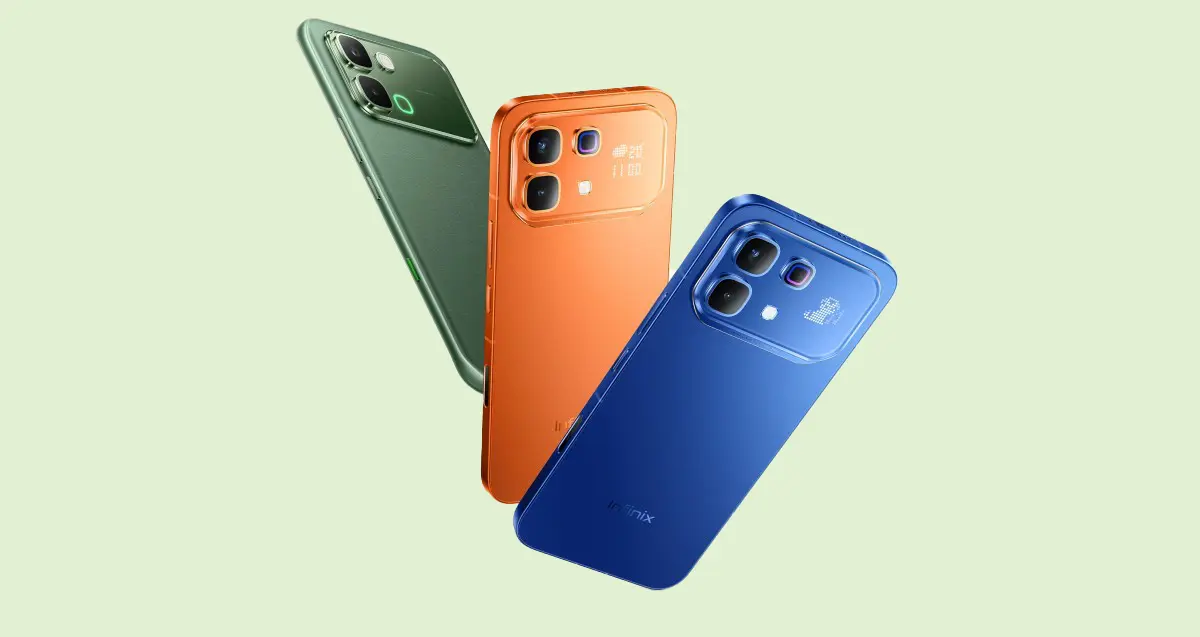
The active matrix display on the back is a nice touch. It stays out of sight when the phone's off, but then lights up when there's something new to show - whether it's a notification, an animated visual, a custom pattern or even a simple little game.
It's not essential, but it adds some personality to this phone - something a lot of devices are sadly lacking.
Up front, it's got:
- A 1.5K display
- 144Hz refresh rate
- Peak brightness of a whopping 4,500 nits - that's seriously bright
- And that display is protected with Corning Gorilla Glass 7i
That brightness level alone is impressive - in bright sunlight, this phone should be easy to read.
And it's great to see the dual speakers tuned by JBL - audio's not always the first thing that people think of in this price bracket, but this is a nice upgrade.
A Camera That's Solid - With Some Smart Extras
The camera setup isn't trying to blow anyone away with a million different lenses or anything, but it does get the basics right:
- 50MP main sensor with OIS (no small thing in this price range - that's a big deal for video and low-light work)
- 112° ultrawide lens
OIS is a big plus because it makes a real difference when you're shooting - especially for video and low-light shots.
What's really got my attention though is the Ultra HDR pipeline. They're not just simulating HDR after they've taken the photo - this phone is actually processing it all from start to finish. That means:
- Better dynamic range
- More natural looking highlights & shadows
Other features and niceties include:
- 4K Ultra-Steady Video
- 2x lossless portrait zoom
- Live Photo mode
- AI editing via Infinix AI Studio
It's a solid camera setup, all things considered - not mind-blowing, but a good, solid effort.
The Battery - The Real Star Of The Show
This is where this phone really starts to get interesting.
The 6,000mAh battery is certainly a big deal, but it's not the only thing that's got my attention.
Infinix are claiming self-healing battery tech - and if they can make it work, that means:
- Up to 2,000 charge cycles (essentially a lot longer battery life)
- Around 6 whole years of reliable performance (that's a long time for a battery)
If that's what it turns out to be, that could be a game-changer. Battery degradation is one of the biggest worries for most people with smartphones.
Recharging, meanwhile, is:
- 90W wired
- 30W wireless
- And you even get a MegaCharge case for alignment